
- SAR Technology
- Copper Isotopes
- Intellectual Property
- Discovery Program
SAR Technology platform
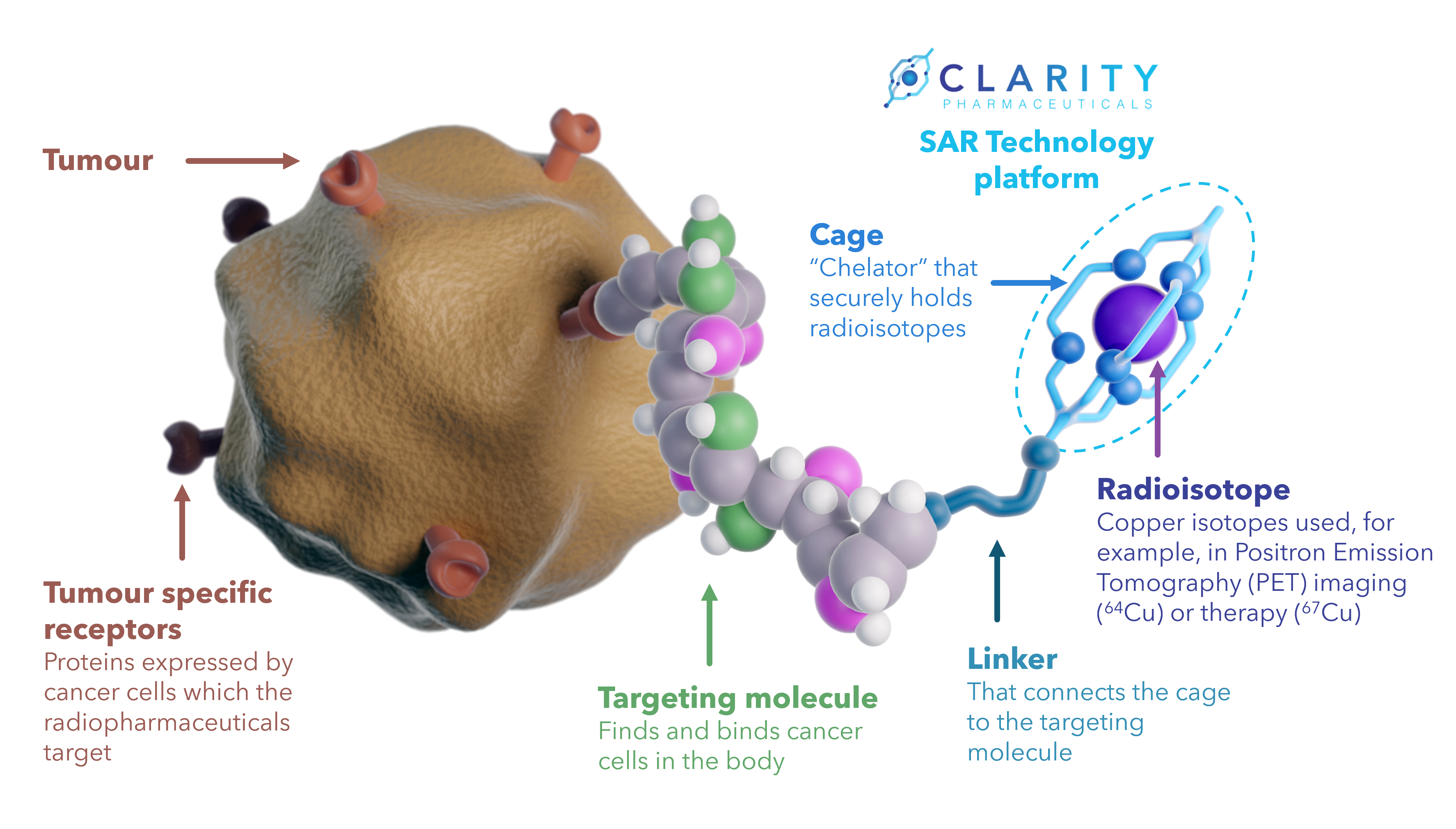
Clarity’s proprietary SAR Technology platform employs a superior chelator (or cage) for copper and can be used to develop next-generation products for the diagnosis and treatment of a wide range of cancers.
SAR Technology Platform
At the heart of Clarity’s theranostic SAR Technology platform is a bifunctional cage called a “chelator” that holds copper isotopes securely within and prevents their leakage into the body. This highly specific and highly stable cage is linked to a targeting molecule, which finds and binds tumour-specific receptors on cancer cells. Once the targeting molecule has found the tumour, the radioisotope can act in that location, either emitting radiation to be picked up by an imaging device (diagnostic radioisotope) or by destroying the cancer cells (therapeutic radioisotope).
Enabled by its proprietary technology, Clarity uses the “perfect pairing” of copper isotopes, copper-64 (Cu-64 or 64Cu) for diagnosis and copper-67 (Cu-67 or 67Cu) for therapy.
Clarity’s proprietary SAR Technology can be used to develop a range of theranostic radiopharmaceutical products that target different types of cancer by combining it with different targeting molecules.
High accuracy and high precision
The two key clinical benefits of using copper isotopes are that they provide high accuracy and high precision in diagnosing and treating cancer.
High accuracy is achieved by only selecting those patients for therapy who show product uptake in the tumours when imaging with a PET scan during the diagnostic stage, an indicator that the product targets the cancer and not healthy tissues, thereby maximising the probability of treatment success.
High precision is achieved by using the same targeting molecule with the same chemical element inside the chelator (a different isotope of copper), ensuring both the diagnostic and therapeutic products have identical targeting in vivo.
Superior copper cage
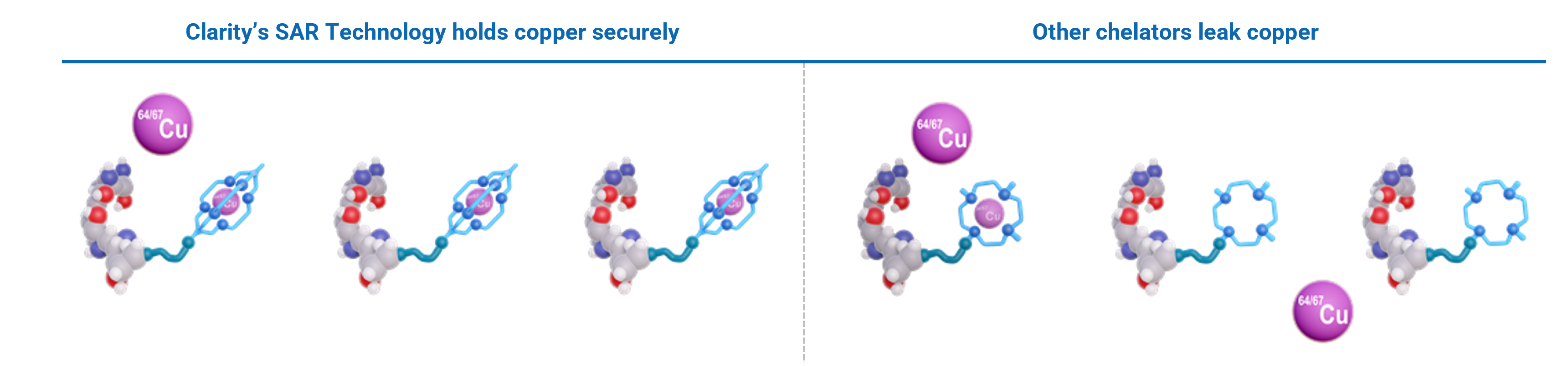
Historically, the utilisation of copper radioisotopes has been hampered as there were limited suitable cages that would hold the isotopes inside securely. Earlier attempts with other cages have resulted in the isotopes of copper being released from the cage once in the body, restricting their diagnostic potential and rendering them unsuitable for therapeutic applications.
SAR Technology, with the sarcophagine chelator at its core, is named after the Egyptian sarcophagus – ‘what goes inside, does not come out’. The chelator is successfully addressing the issue of isotope leakage, allowing Clarity to fully leverage the advantages of the copper isotopes.
Clarity holds a large IP portfolio on the SAR Technology platform, enabling its commercial development, whereas most other chelators remain unpatented.
Clinical Evidence
Clarity’s SAR Technology ensures superior clinical outcomes in comparison to other commercially available chelator technologies.
Comparison of 64Cu SARTATE and 64Cu DOTATATE
Clarity’s 64Cu SARTATE
Hicks et al. J Nucl Med 2019; 60:777-785
64Cu DOTATATE
Pfeifer et al. J Nucl Med 2012; 53:1207-15
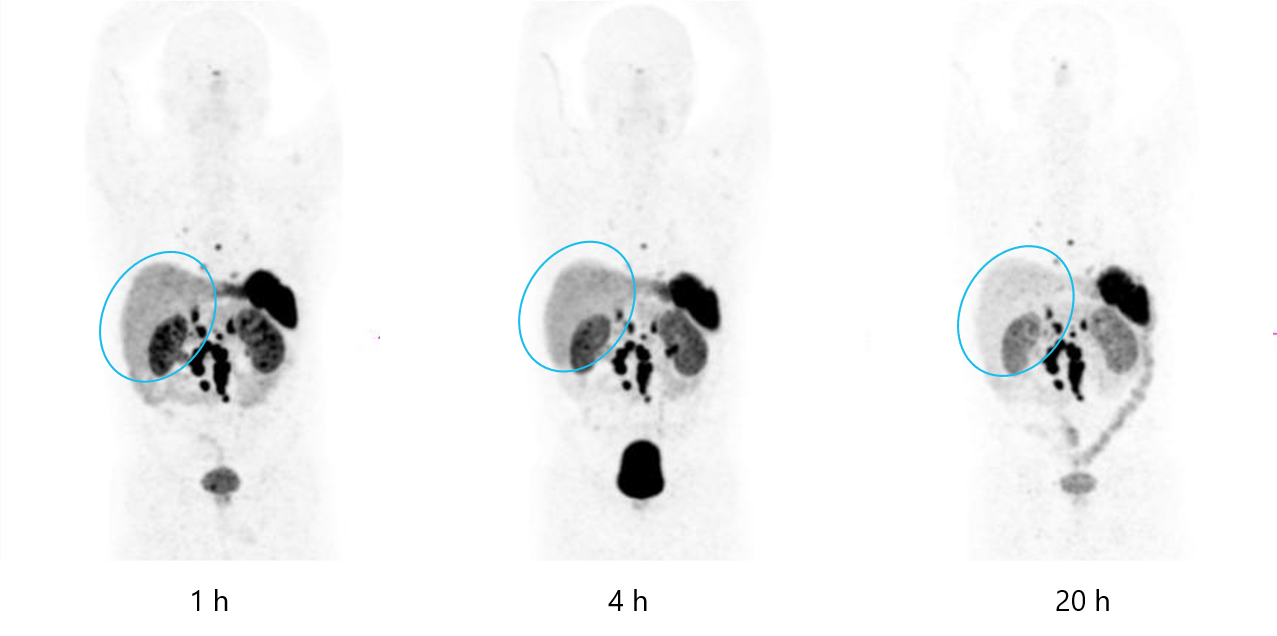
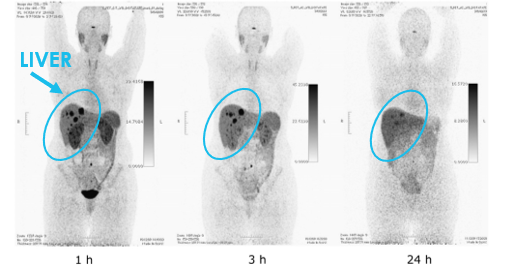
These two studies highlight the improvement in clinical outcomes that Clarity’s SAR Technology brings. If a chelator leaks copper-64, the free copper-64 usually accumulates in the liver, presenting background radioactivity on diagnostic scans. The images of 64Cu-SARTATE (image on the left) highlight that there is a decrease in detected radioactivity in the liver over time, indicating that there is minimal free copper-64 in the body, and therefore minimal copper leaking from the product. In contrast, images with 64Cu-DOTATATE (image on the right), which employs a chelator called DOTA, show that there is increasing background in the liver over 24 hours, indicative of the presence of free copper-64, suggesting leakage from the DOTA chelator.
As a result, Clarity’s chelator technology allows PET images to be collected over a wide range of timepoints and, importantly, permits the use of copper-67 based products for therapy.
Based on this platform technology, Clarity is developing a pipeline of Targeted Copper Theranostics (TCTs) and progressing a number of clinical trials in a range of cancer indications, including prostate cancer and neuroendocrine tumours (NETs). Details of Clarity’s current clinical program can be found in the Pipeline section of the website.
Clarity also continues to expand its product pipeline with a new generation of radiopharmaceuticals through its to explore further areas with unmet needs.